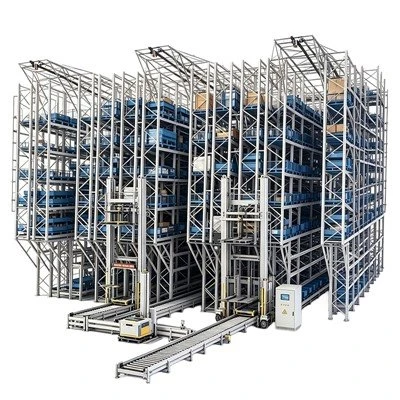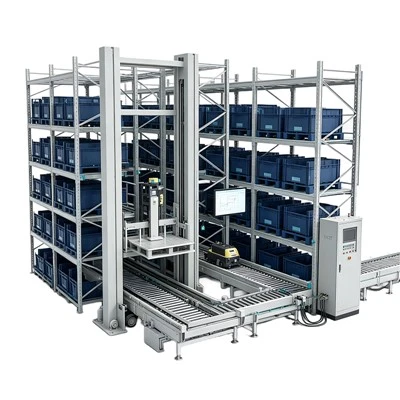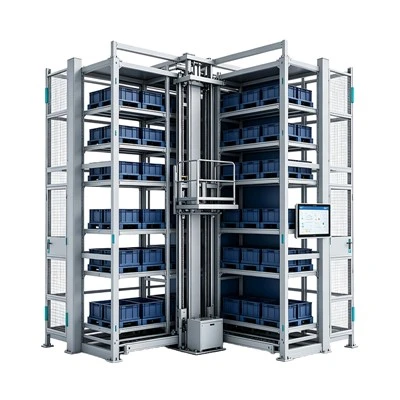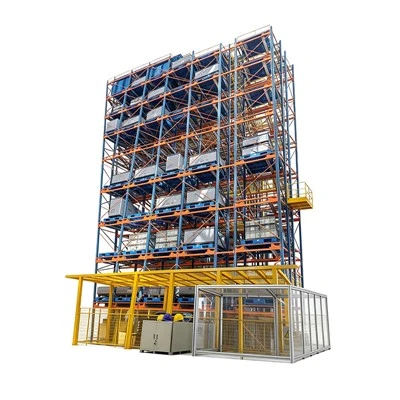

Warehouse storage equipment is primarily used for the classification, storage, and management of goods, serving as fundamental infrastructure for daily warehouse operations. Common equipment includes shelving units, pallets, totes, storage bins, and stacking equipment. Shelving systems can be selected based on factors such as warehouse floor area, ceiling height, and the characteristics of the goods; options include selective pallet racks, drive-in racks, mezzanine racks, and flow racks. Proper configuration of this equipment maximizes space utilization while facilitating the storage, retrieval, and inventory counting processes for staff.
In addition to basic storage infrastructure, warehouses require appropriate material handling equipment to facilitate the movement of goods during receiving, put-away, picking, and dispatch. Common handling equipment includes forklifts, stackers, manual pallet jacks, electric pallet trucks, and conveyor systems. For warehouses with high inventory volumes and rapid turnover, facilities such as conveyor lines and lifts can be installed to reduce manual handling and enhance overall operational efficiency. Equipment selection should take into account factors such as cargo weight, transport distance, and operational frequency.
To meet increasingly stringent warehousing management standards, some warehouses also deploy intelligent technologies and systems, such as barcode scanners, RFID equipment, Warehouse Management Systems (WMS), and Automated Storage and Retrieval Systems (AS/RS). These tools enable precise tracking of cargo locations, quantities, and inbound/outbound movements, thereby improving inventory accuracy. Large-scale warehousing centers can adopt an integrated planning approach-combining shelving, handling equipment, and information systems-to boost space utilization and management efficiency while ensuring safety and practicality.