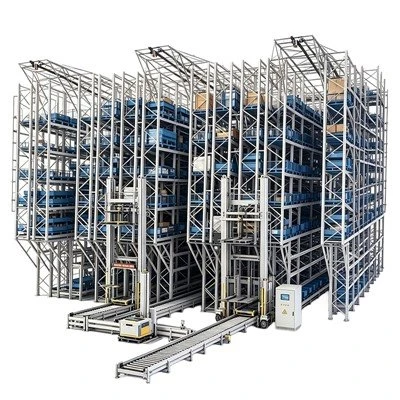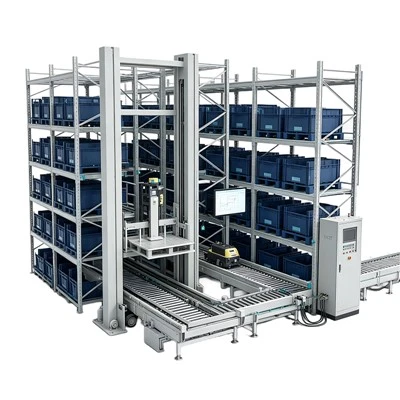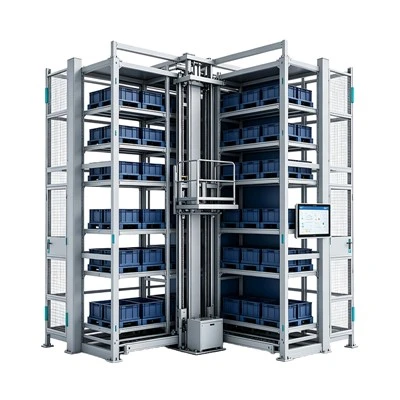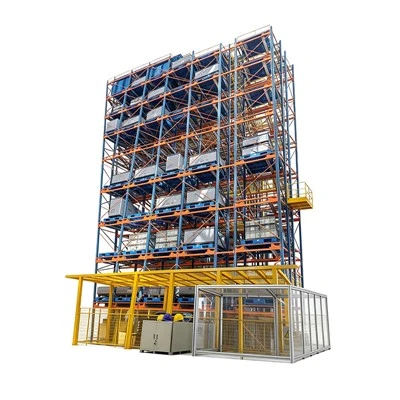

Stacker cranes can be classified into various types based on different criteria. In terms of structural design, common types include single-mast and double-mast stacker cranes. Single-mast stackers are lighter and feature a simpler overall structure, making them suitable for applications with moderate load capacity and lifting height requirements. Double-mast stackers utilize two masts to support the load platform, offering superior stability and load-bearing capacity; consequently, they are widely used in large-scale automated high-bay warehouses.
Based on their intended use, stacker cranes can also be categorized into pallet stackers, bin/tote stackers, and order-picking stackers. Pallet stackers are primarily designed for handling full pallets of goods, making them ideal for high-volume storage environments. Bin/tote stackers are used for handling smaller items-such as parts bins or totes-and are commonly employed for storing components and small merchandise. Order-picking stackers transport operators directly to specific storage locations for manual picking, making them suitable for operations requiring frequent retrieval of individual items.
Stacker cranes can also be classified according to their operating tracks and application environments, distinguishing between aisle-based stacker cranes and other specialized stacking equipment. Aisle-based stacker cranes are a common fixture in automated high-bay warehouses; they operate within the aisles between storage racks, performing storage and retrieval tasks through horizontal travel, vertical lifting, and the extension/retraction of load-handling forks. As different types of stacker cranes vary in structure, load capacity, operating speed, and scope of application, the selection process must take into account factors such as the type of goods, rack height, storage volume, and specific operational requirements.