


If you’ve ever walked through a busy warehouse at 2 a.m., watching endless streams of quiet, wheeled robots zip past pallets and forklifts without a single human driver, you’ve seen AGVs in action. As the founder of a small, specialized AGV supplier, I’ve spent the last 8 years talking to warehouse managers, distribution center leads, and packaging plant operators about their biggest pain points: unplanned downtime, bottlenecks that stall order fulfillment, and the constant stress of keeping track of moving inventory. One question I get asked more than any other is: Can AGVs be integrated with IoT systems to fix these issues? The short answer is yes—and it’s already changing how warehouses run.
Let’s start with a quick breakdown of what AGVs actually are, for anyone who might be new to the space. AGVs (Automated Guided Vehicles) are basically self-driving workhorses built for material transport, no human behind the wheel. There are a ton of types tailored to different tasks, from moving heavy loads to delicate parts. For example, if you need to move full pallets around a loading dock, you might use a Unit Load Automated Guided Vehicle, which is designed to carry standardized pallets safely without jostling their contents. If you’re hauling loose, bulky goods like boxes of packaged snacks, a Towing Automated Guided Vehicle could pull multiple trailers at once, cutting down on how many trips a single robot has to make. And for warehouses that need to stack and retrieve pallets from high racks, a Forklift Automated Guided Vehicle does exactly what it sounds like—operates like a standard forklift but autonomously, so there’s no risk of human error stacking items too high or dropping them. If you’re putting together a whole system instead of just one robot, the Automated Guided Vehicle System ties all these different AGV types together, so they communicate, share space, and don’t crash into each other mid-mission.
AGVs have been around for decades, right? The first ones popped up in car factories in the 1950s, following magnetic tapes on the floor. But back then, they were super rigid—you had to re-lay the tape every time you rearranged the warehouse, which was a huge hassle. Fast forward to today, and AGVs use things like LiDAR sensors, camera navigation, and preloaded digital maps to move around. The missing piece, though, was connecting them to the rest of a warehouse’s digital tools—until IoT came along.
IoT, or the Internet of Things, is just a fancy way of saying “everyday objects connected to the internet, sending and receiving data.” Think of it like your smart thermostat that adjusts the temperature when you’re away, or your phone that gets a alert when your front door camera spots someone. For AGVs, IoT lets them talk to all the other tech in a facility: warehouse management systems (WMS), inventory trackers, even other AGVs. The integration isn’t just a nice-to-have—it solves so many of the problems I hear about from customers. Let’s dive into the real-world benefits, not just tech jargon.
First, there’s way less unplanned downtime. A few months back, a manufacturing client of mine had a AGV that kept stalling for no obvious reason—their old setup only alerted their team if the robot stopped working entirely, by which time an entire production line was backed up. After we integrated their AGVs with IoT, we set up real-time data alerts: the robot’s sensor was picking up a tiny piece of debris on its navigation path, and the IoT system caught the tiny, unusual vibration the sensor was sending before it even triggered a stall. The team got a phone alert while they were on break, grabbed a quick broom, and fixed it before any downtime happened. That’s the power of IoT: it catches small issues before they become big ones. Without IoT, you’re only getting status updates when something breaks. With IoT, you’re getting constant, granular data.

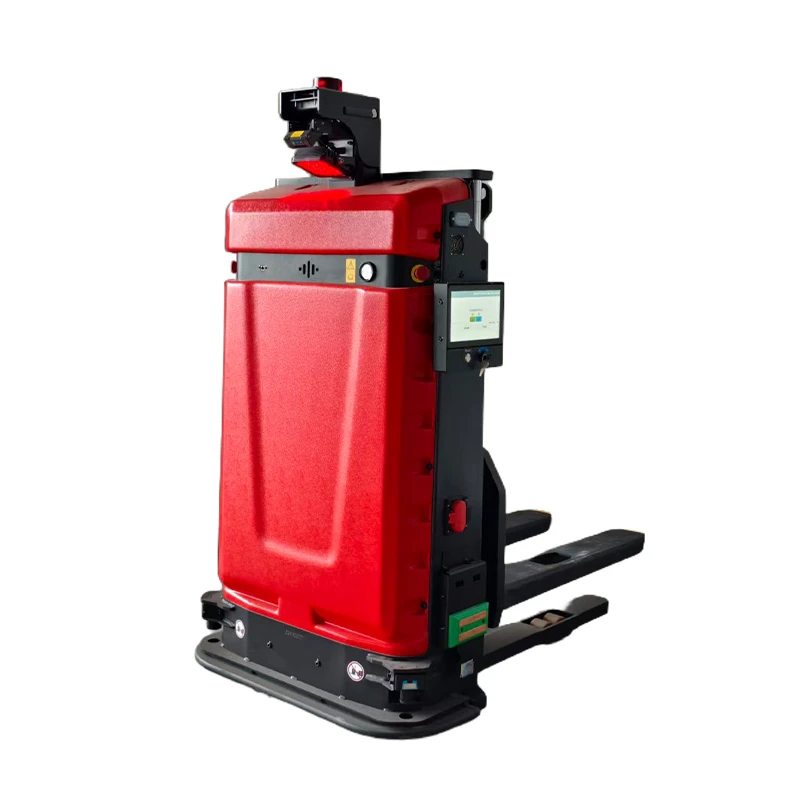
Then there’s efficiency. Most warehouses run on tight schedules, and if one AGV is running late, it throws off the whole flow. Let’s say you have an order that needs to be packed and shipped in 2 hours. Without IoT, your AGVs are following a fixed route, regardless of what else is happening. But with IoT, each AGV knows where all the other AGVs are, where the WMS needs pallets to go, and even how busy the packaging stations are. So if one AGV is delayed because a forklift is in its way, the IoT system can re-route a nearby AGV to pick up that pallet instead, cutting down on wait time. I’ve seen clients boost their order fulfillment speed by 20-30% just from adding this small integration—no extra robots, no new floor space, just better communication between machines.
Another big win is inventory accuracy. A lot of warehouses still rely on manual counts, which are slow and prone to mistakes. When AGVs are connected to IoT, every time an AGV picks up a pallet of goods, it scans the barcodes, sends that data straight to the inventory system, and updates the count in real time. No more lost pallets that got mislabeled or misplaced because a worker forgot to log it. Last quarter, a distribution client reduced their inventory counting errors by 85% after integrating their Unit Load Automated Guided Vehicles with their IoT system. That’s a huge deal because inventory mistakes lead to overstocking, understocking, and even lost sales when you can’t find an item a customer ordered.
Wait, but I know what some people are worried about: is this integration reliable? What if the Wi-Fi goes out, and all the AGVs stop working? That’s a valid concern, and it’s not something I take lightly. When we design integrated systems for our clients, we build in offline functionality. Each AGV stores its route and data locally, so if the Wi-Fi drops, it can keep operating on its preloaded map until the connection comes back. We also use redundant network setups—like cellular backups for areas with spotty warehouse Wi-Fi—so there’s no single point of failure. From my experience working with hundreds of clients, the reliability of integrated AGV-IoT systems is actually higher than standalone AGVs, because you get way more visibility into how everything is running.
Of course, it’s not a plug-and-play solution for every warehouse. Smaller facilities with just 2-3 AGVs might not need the full IoT setup right away—they can start with basic data tracking, like checking if their AGVs are running on schedule. Larger facilities with 10+ AGVs, or ones that handle high-volume order fulfillment, will see the biggest return on investment from full integration. The key is working with a supplier who can tailor the setup to your specific needs, not just sell you a one-size-fits-all system.
As someone who’s been in the AGV game for years, I’ve seen how far we’ve come. When I started, AGVs were clunky, limited tools that only big factories could afford. Now, with IoT integration, they’re flexible, smart, and accessible for warehouses of all sizes. Whether you’re moving a few pallets a day or 10,000, there’s an AGV and IoT setup that can fit your workflow.
If you’re curious about how this could work for your facility, or want to learn more about the different AGV types that pair well with IoT (like the Towing Automated Guided Vehicle or Forklift Automated Guided Vehicle I mentioned earlier), we’re here to help. We’ve worked with everything from small local packaging plants to large national distribution centers, and we can walk you through the benefits, the costs, and how to get started without disrupting your current operations. Just reach out to talk through your needs.
When we talk about the future of warehouses, AGV-IoT integration is going to be standard. It’s not just about making robots smarter—it’s about making the whole operation smoother, less stressful, and more profitable. After all, the best warehouse systems are the ones that work for the people running them, not against them.
References
- Industrial Truck Association. (2023). Automated Guided Vehicle Standards and Applications. Retrieved from Industrial Truck Association.
- Gartner. (2024). IoT in Supply Chain and Warehouse Operations: Market Trends and Adoption. Gartner Inc.
- Zhang, Y., et al. (2022). Integration of AGVs and IoT for Smart Warehouse Management. Journal of Industrial Engineering and Operations Management, 15(2), 112-128.
- Material Handling Industry (MHI). (2023). AGV and AMR Technology Roadmap: 2023-2028. MHI.
- Cisco IoT. (2022). Connected AGVs: Optimizing Warehouse Efficiency with IoT. Cisco Systems, Inc.


